Intel Pentium 3 1.2 GHZ “Tualatin” (Page 2/8)
Posted: July 30, 2001
Written by: Tuan Huynh
Not Just a Speed Increase... (cont.)
While the Coppermine uses a FC-PGA packaging, the Tualatin uses the newer FC-PGA2 packaging. What does this all mean? It means that if you want to be able to use the Tualatin, you have to upgrade the motherboard as well. Users looking for a quick upgrade for their Pentium 3 Coppermine will not be able to use the Tualatin.
Supported chipsets will be another issue altogether. The Coppermine, which has been out for quite a while, is compatible with virtually any Socket 370 chipset available on the market today. To be able to use the Tualatin on the other hand requires a new chipset. The Tualatin using much lower voltage is only compatible with the most recent revision of chipsets including and not limited to the i815E B Stepping and Apollo Pro 266T.
Physically Different
If you’ve ever installed a Socket A Athlon processor before, you’ll probably know how easily you can crack the core if you aren’t careful. With the Tualatin, Intel decided to protect the fragile core by installing a heat spreader plate. This is a very good decision on Intel’s part since there have been a lot of horror stories of people cracking Athlon cores. With the heat spreader plate, the Tualatin looks similar to the Pentium 4.
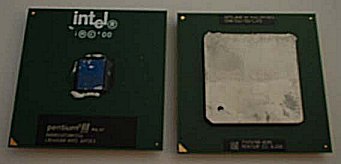
While both the Coppermine and Tualatin use the Socket 370 interface, the backside is somewhat different; with the Tualatin the bridges are much smaller compared to the Coppermine, most likely due to the 0.13 fabrication process.

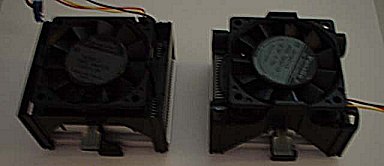
Recently Intel has been bundling the P3 1.0 GHz with an aluminum heatsink designed for high-speed Socket 370 processors. The included heatsink for the Tualatin is no different except for the way the fan is mounted onto the heatsink. If you thought the heatsink for the 1GHz Pentium 3 was hard to put on and take off, try taking off the Tualatin heatsink -- it’s a pain to put on or take off.
 Benchmark System
Intel Pentium 3 Tualatin 1.2GHz,
Benchmark System
Intel Pentium 3 Tualatin 1.2GHz,
Intel Pentium 3 Coppermine 1GHz,
Intel Pentium 3 Coppermine 933MHz,
AMD Athlon Thunderbird 1.2GHz,
Intel Desktop Board 815EEA2 (i815E),
Asus A7V133 (KT133A),
Crucial 256MB PC133 CL3,
ATI Radeon 32DDR with Leaked beta 3224,
Maxtor Diamond Max Plus 40 GB UltraATA/100 7200RPM,
Toshiba 16x DVD Rom,
AOpen CRW1232A,
Intel Pro100 VE Ethernet Adaptor,
Hercules GameTheater XP.
SiSoft Sandra
CPU Test
Memory Test
Bapco Sysmark 2001
Internet Content Creation
Office Productivity
CSA Research Office Bench with Office XP
Baseline
High-Stress
3D Mark 2001
1024x768 Default 32bit
Quake 3 Arena HQ with 1.29f Point Release
Demo Four
800x600
1024x768
1280x1024
Next Page